
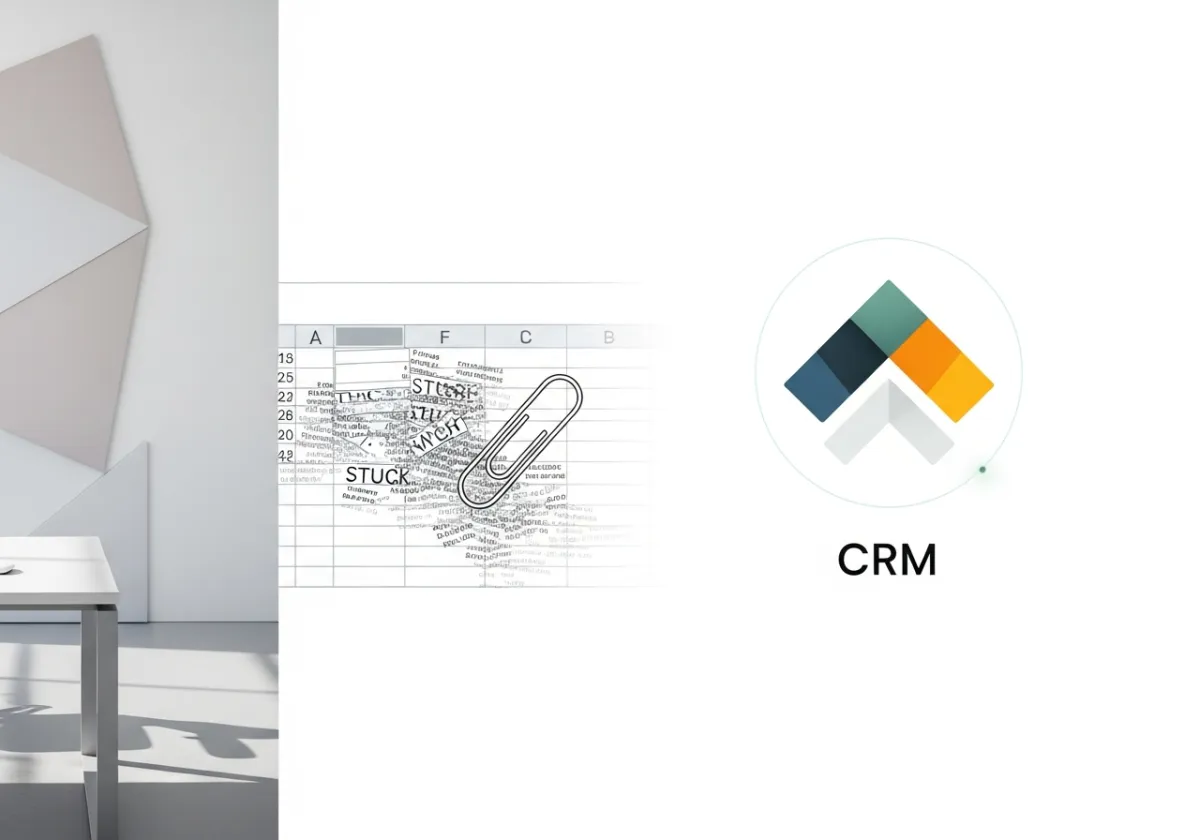
CRM vs. Spreadsheet: A Side-by-Side Comparison for Small Business Owners
The Tool You Trust Is the One Quietly Costing You
You built your business on hustle. You know your product, you know your market, and you work harder than anyone around you. So why does revenue still feel unpredictable? Why are deals slipping through the cracks even when you are putting in 60-hour weeks?
Nine times out of ten, the answer is not effort. It is the tool sitting in your browser tab right now — that spreadsheet you have been relying on to manage every lead, every follow-up, and every client relationship.
It feels familiar. It feels free. But it is bleeding you dry.
CRM vs. Spreadsheet: What the Comparison Actually Looks Like
Let us put both options side by side — not in theory, but in the reality of running a small business day to day.
Lead Visibility
- Spreadsheet: A flat list of names, statuses, and notes that only makes sense to the person who built it. No visual pipeline. No stage tracking. No instant answer to "where is this deal right now?"
- CRM: A live, visual pipeline that shows every lead at every stage. You open it and you know exactly what needs attention — no scrolling, no guessing.
Follow-Up Execution
- Spreadsheet: Follow-ups depend entirely on your memory or a color-coded cell you might forget to check. When life gets busy, leads go cold and marketing dollars go to waste.
- CRM: Automated follow-up sequences fire on schedule — emails, SMS, reminders — without you lifting a finger. No lead falls silent because you got pulled into another meeting.
Data Integrity
- Spreadsheet: Anyone who has ever typed into the wrong row or overwritten a formula knows this pain. Manual data entry is a slow, compounding error machine. This is the spreadsheet vs. database problem in its most damaging form.
- CRM: Data is structured, logged automatically, and tied to contact records. Every call, email, and deal stage is captured. The system does the admin work so you do not have to.
Scalability
- Spreadsheet: Works fine at 20 leads. Falls apart at 200. You end up managing the spreadsheet instead of managing the business.
- CRM: Scales with you. More leads, more clients, more revenue — the system handles the complexity so your output grows without your workload doubling.
The Real Cost of Manual Tracking Problems
Every lead you forget to follow up with represents real money you already spent acquiring. Every hour you spend updating rows and hunting for context is an hour you are not spending on growth. That is not just inefficiency — it is a direct tax on your ambition.
The manual tracking problems most small business owners live with are not minor inconveniences. They are the reason a business that should be thriving feels like it is always one step behind.
What a Purpose-Built System Actually Gives You
A CRM built for small business owners does not just replace a spreadsheet. It gives you command over your pipeline, your follow-ups, your bookings, and your client communication — all from one workspace.
Sell Sm@rter SalesHub starts at $47 per month and brings your CRM, marketing funnels, automated follow-ups, and booking system under one roof. No more duct-taped tools. No more lost leads. No more working harder than the results justify.
If you are ready to understand what a CRM can do for your specific situation, start with the complete guide to sales CRM software for small businesses.
Your effort deserves a system that matches it.