
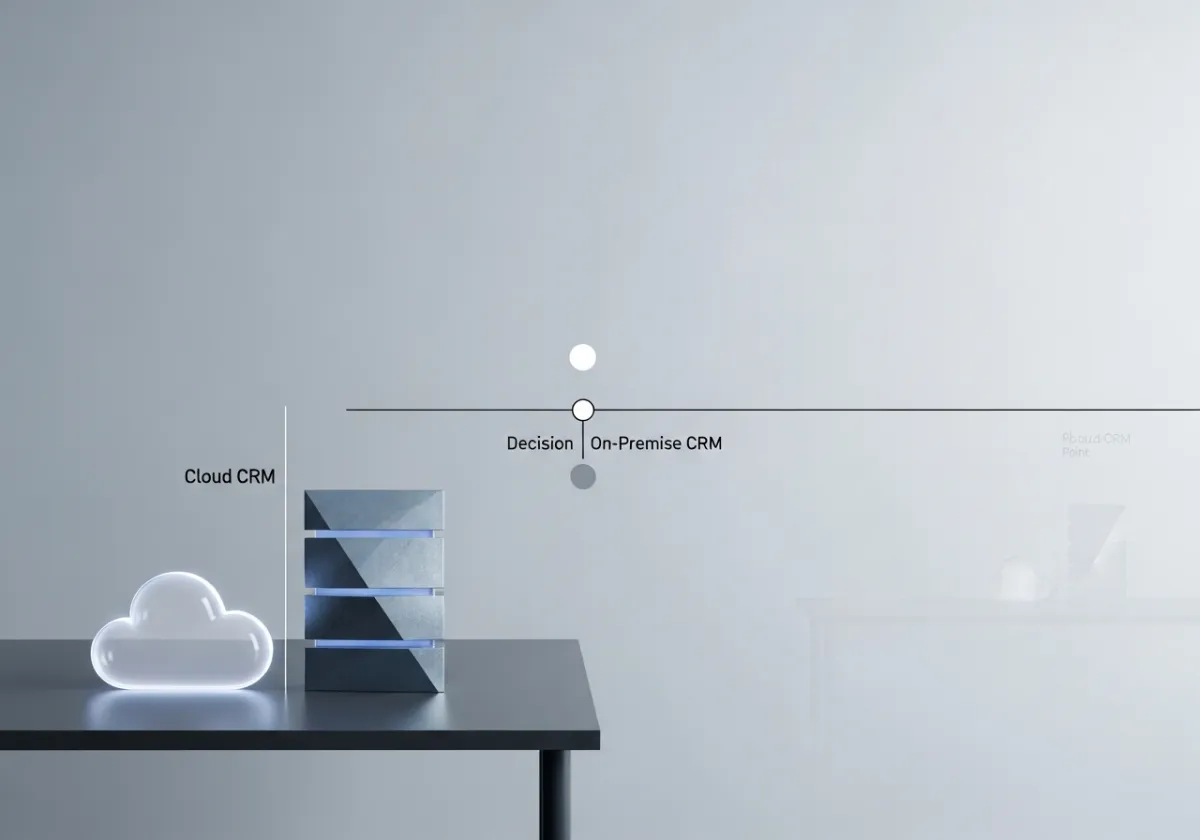
Cloud CRM vs On-Premise: Which Is Right for Your Business? | SalesHub
Cloud CRM vs. On-Premise: Which Is Right for Your Business?
Choosing between a cloud CRM vs on premise solution is one of the most important technology decisions your business will make. Both options have real strengths, and the right choice depends on your team size, budget, IT capacity, and long-term growth plans. This guide breaks down the key differences so you can move forward with confidence.
What Is a Cloud Based CRM?
A cloud based CRM is hosted on remote servers managed by your software provider. You access it through a web browser or mobile app, and the vendor handles all maintenance, security patches, and infrastructure updates. Popular examples include Salesforce, HubSpot, and Zoho CRM.
The biggest advantage of cloud based CRM is accessibility. Your sales team can log in from anywhere, at any time, using any device. This makes it ideal for remote teams, traveling sales reps, and businesses with multiple office locations. Setup is fast, upfront costs are low, and you pay a predictable monthly or annual subscription fee.
However, you are dependent on a stable internet connection. You also have less direct control over where your data is stored, which can be a concern for businesses in highly regulated industries.
What Is On-Premise CRM Software?
On-premise software is installed directly on your company's own servers and hardware. Your internal IT team manages the system, handles updates, and maintains security. You own the license outright rather than paying an ongoing subscription.
On-premise CRM hosting options give you full control over your data environment. This is a major benefit for industries such as finance, healthcare, or government where strict data sovereignty regulations apply. Customization is also deeper, since your developers can modify the software at a foundational level.
The trade-off is significant. Initial costs are high because you must purchase hardware, licenses, and often specialist IT support. Deployment takes longer, and your team is responsible for every upgrade and security fix. Scaling the system as your business grows also requires additional hardware investment.
Cloud CRM vs On Premise: Side-by-Side Comparison
Cost: Cloud CRM uses a subscription model with low upfront costs. On-premise requires a large initial capital investment.
Accessibility: Cloud based CRM works from anywhere. On-premise is typically accessed from within the company network.
Control: On-premise gives you full data ownership. Cloud CRM relies on your vendor's infrastructure.
Maintenance: Cloud vendors handle updates automatically. On-premise maintenance is your responsibility.
Scalability: Cloud CRM scales instantly. On-premise scaling requires new hardware purchases.
Which CRM Hosting Option Is Right for You?
If you are a growing small or mid-sized business that needs speed, flexibility, and lower upfront costs, a cloud based CRM is almost always the smarter starting point. If you are operating in a heavily regulated sector or you require complete control over a complex data environment, on-premise software may justify the higher investment.
Not sure where to start? Read our complete CRM software guide for small businesses to understand the full landscape before you commit to a platform.
The best CRM is the one your team will actually use. Evaluate your current infrastructure, your budget, and your five-year growth plan before you decide.